
Candle salad is a vintage fruit salad that was popular in America from the 1920s through to the 1960s.
https://www.tumblr.com/theoddsideofme/789191562319020032

Candle salad is a vintage fruit salad that was popular in America from the 1920s through to the 1960s.
https://www.tumblr.com/theoddsideofme/789191562319020032
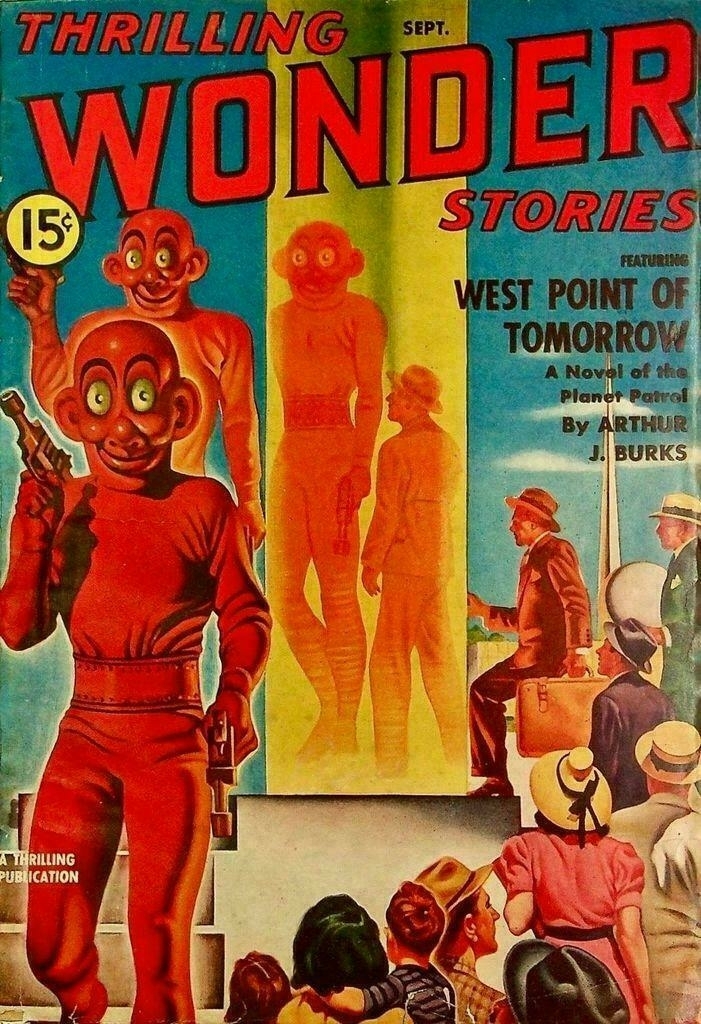
Thrilling Wonder Stories, vol. 17, no. 3 (September 1940), with cover art by Earle Bergey illustrating a scene from Oscar J. Friend’s short story, “The Stolen Spectrum.”
https://www.tumblr.com/theoddsideofme/789195089792598016

Sheepdog says nope https://www.tumblr.com/jimstares/789187338148478976
“Your grandfather has the most nonspecific midcentury visage I have ever seen” https://www.tumblr.com/atomic-two-sheds/789196281946963968/your-grandfather-has-the-most-nonspecific
The Jargonizer translates plain speech into corporate language.
"How did you manage to fuck that up so bad?" -> "I am perplexed by the unforeseen consequences of the recent initiative. Could you provide insight into the factors that contributed to the suboptimal outcome?"
A friend told me yesterday that I should take up painting. Later, I was reviewing my to-do list and saw, in the someday/maybe area: “Learn to draw? Take a class?” I have no memory of adding that task, but my to-do software says I added it three weeks ago.
I have not tried to draw anything since I was a pre-teen in art class. I expect if I tried now, the result would be so bad that you would not even be able to figure out what I am trying to draw.
And yet….
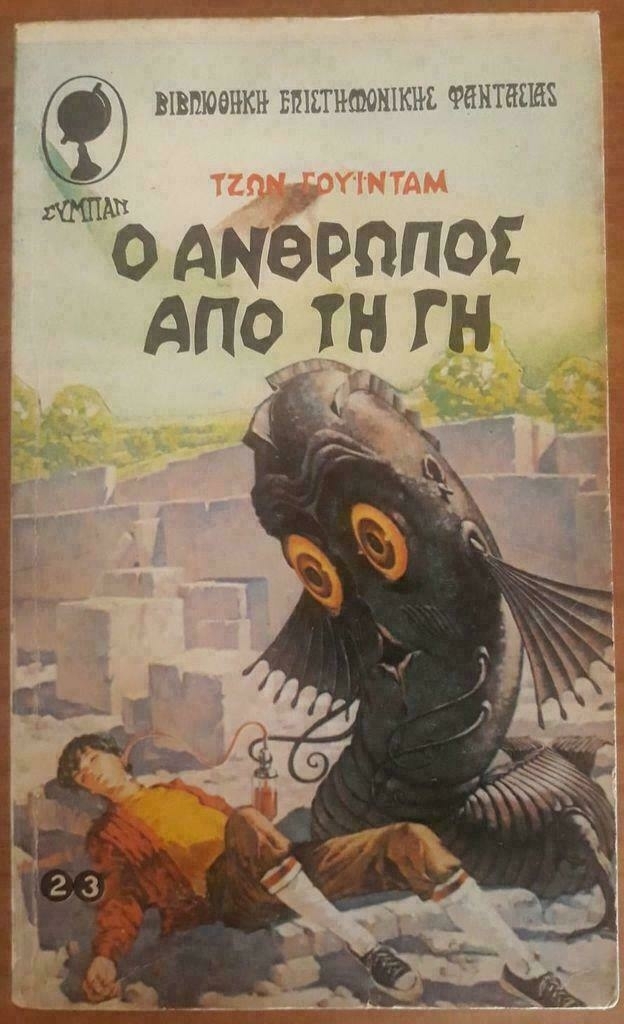
“The Man From Beyond,” by John Wyndham, Greek edition
The first time America tried mass deportation, it was a disaster https://www.politico.com/magazine/story/2015/10/donald-trump-2016-mass-deportation-213287/
The Indian Removal Act of 1830 forced 80,000 people from their homes. "It was a humanitarian disaster and remains one of the most shameful episodes in the country’s history."
It was hotly contested and opponents filed many petitions against it.
"With one or two exceptions, the petitions voiced a powerful opposition to the forced emigration of native peoples. They addressed the particulars of the matter—broken treaties and the imperious claims of state governments—but they also spoke to a deep-seated belief about the young republic that is relevant to today’s debate about undocumented immigrants. The United States, they insisted, stood for 'justice and the rights of mankind. It did not disregard 'the cries of the oppressed and the sufferings of the helpless.'
"Recalling their own ancestors who had fled from oppressive governments in Europe, petitioners called for justice to be done to the native peoples who long ago had welcomed European immigrants. They condemned state laws that persecuted Native Americans and questioned the ability of the government to remove so many people safely. More generally, they called on Congress to prevent 'our national character from being disgraced, by the perpetration of an atrocious outrage.'
"The Indian Removal Act passed the House of Representatives in May 1830 by a mere five votes out of 199 cast. The public debate over the policy led anti-slavery activists such as William Lloyd Garrison to recognize the folly and immorality of mass deportation and encouraged them to turn against contemporaneous efforts to deport free and enslaved African-Americans to Africa. The deportation of Indians, recognized one group of residents from Lexington, New York, would 'stamp our national character with indelible infamy.' They were right. Politicians and their supporters should take note. We shouldn’t make the same mistake twice."